
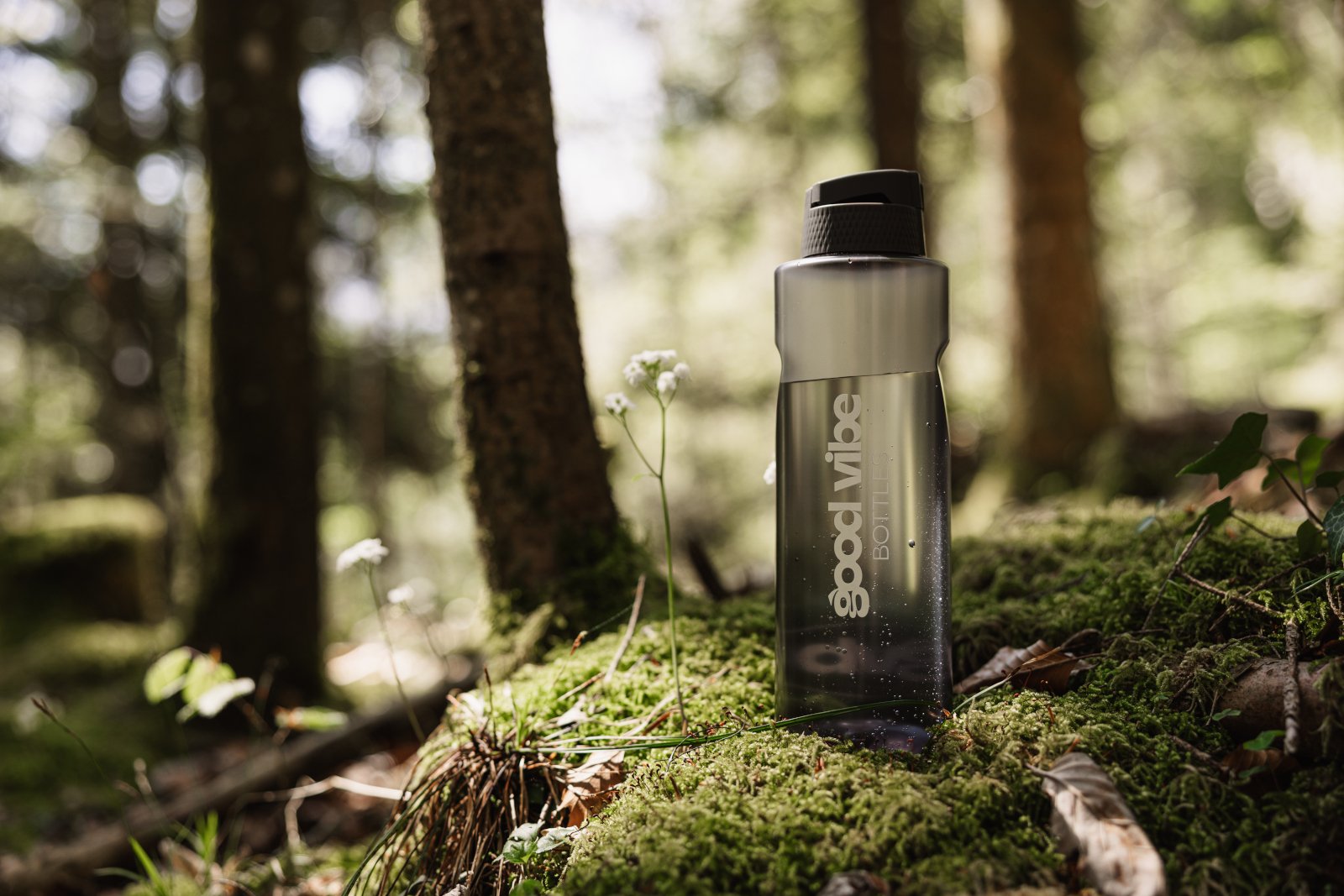
Sustainable water bottles have grown from a niche product into a strategic decision: for companies buying water bottles for their employees, for clubs equipping their members for training and competition, and for institutions that want to make their values visible. Material, workmanship and cap decide whether the product ends up in a drawer after three months or is still in daily use five years on. Because a bottle does not become sustainable by having "sustainable" printed on the packaging; it becomes sustainable by being used often and for a long time. Here you will find materials, environmental figures and typical mistakes put into perspective, so your decision rests on facts.
What makes a water bottle truly sustainable?
The most important factor is the length of use. Every reusable bottle starts with an ecological backpack of raw material extraction, manufacturing and transport. This footprint spreads across more uses with every refill; only after a certain number of uses does the bottle drop below the footprint of the single-use alternative. A bottle retired after 40 refills because the lid wears out never pays off its footprint.
The second factor is the replaceability of individual parts. Silicone seals are wear parts and harden after two to four years. If a manufacturer offers replacement seals and lids, this extends the life of the entire bottle by years, for the price of a small part. Check whether the lid can be taken apart and the seal removed.
The third factor is material purity. A bottle made almost entirely of a single material can be recycled cleanly; combinations of metal, several types of plastic, adhesive layers and paint make separation difficult to impossible. And finally, actual usage matters: weight, grip, opening width and looks decide whether a bottle comes along every day. The most ecological bottle is always the one that stays in use.
Materials compared: stainless steel, glass, aluminium and Tritan
The four common material groups differ noticeably in weight, taste neutrality, break resistance and recyclability. No material wins in every category; the right choice depends on the use case.
Stainless steel is the most versatile choice for everyday use. Most bottles use stainless steel 18/8 (also known as 304): corrosion-resistant, taste-neutral, and it survives a fall onto concrete with a dent instead of a break. The material can also be melted down again and again without losing quality, and double-walled stainless steel water bottles keep drinks hot or cold for hours.
Borosilicate glass wins on taste neutrality. It absorbs no flavours, releases nothing and is fully transparent. The downside: glass is heavier and more fragile; a silicone sleeve, a protective cover pulled over the bottle, reduces the risk considerably and improves grip. If you are looking for a glass water bottle for offices, meeting rooms or wellness areas, you get the most hygienic drinking experience.
Aluminium is light but always needs an inner coating, because the metal would otherwise react with acidic drinks. This coating is precisely the weak spot: it can crack from impacts or aggressive cleaning, invisible from the outside. Primary aluminium production is also extremely energy-intensive.
Plastic is not automatically the worst option, provided the right type is used. Tritan is a modern plastic from the copolyester family that looks as clear as glass, is break-proof and is manufactured BPA-free; lids and inner parts are often made of polypropylene (PP), which is also food-safe. A Tritan water bottle offers the lowest weight with high break resistance, relevant wherever glass would be a safety risk.
| Material | Weight (0.5 l) | Taste-neutral | Break-proof | Insulating | Recycling |
|---|---|---|---|---|---|
| Stainless steel 18/8 | 160–350 g (single-/double-walled) | yes | very high | yes (double-walled) | unlimited, single-material |
| Borosilicate glass | 380–500 g | yes, completely | low (medium with sleeve) | no | good, separated from the sleeve |
| Aluminium | 100–150 g | only with intact coating | high (dents) | limited | good, very energy-intensive to produce |
| Tritan | 90–150 g | largely | very high | no | limited, depends on type |
What to look for in the cap and material mix
The body gets almost all the attention, yet in practice the lid decides leak-proofness, hygiene and lifespan. Almost every cap combines a rigid plastic or metal part with an elastic seal, usually made of silicone, and precisely this combination is the most common point of failure.
Pay attention to three points. First: can the seal be removed without tools? Only then can you reach the groove underneath when cleaning. Second: what material is the inner thread made of? The material specification must cover every part that comes into contact with the drink. Third: how is the drinking mechanism built? Flip-top caps with straws have far more inner surfaces and hard-to-reach channels than a simple screw cap. Carbonated drinks add internal pressure on top: only a pressure-resistant screw cap is suitable for them; drinking valves and flip-tops are not designed for it.
What matters with BPA, harmful substances and food safety
BPA stands for bisphenol A, a chemical used in some plastics as a plasticiser or building block and suspected of having hormonal effects. A BPA-free water bottle does without it. Reputable manufacturers go further and declare their bottles BPA- and BPS-free, because BPS is a widely used substitute that is viewed just as critically. With stainless steel and glass the question hardly arises, as these materials need no plasticisers.
The legal baseline is the same for every supplier: every product that comes into contact with food must comply with EU Regulation (EC) No 1935/2004, plastics additionally with Regulation (EU) No 10/2011; in Germany the LFGB food safety requirements apply on top. This is not an award but a legal obligation. More meaningful than legally unprotected marketing terms such as "eco" is therefore the specific material declaration: "stainless steel 18/8" or "Tritan, BPA- and BPS-free" can be verified, "high-quality plastic" cannot. If such details are missing, ask the supplier directly; a reputable supplier will answer precisely and in writing.
Carbon footprint and break-even versus single-use bottles
The decisive figure is the break-even point: after how many uses has a reusable bottle recouped its higher manufacturing footprint? As a rule of thumb, a stainless steel bottle pays off against single-use PET bottles after around 50 to 100 refills, a glass bottle after around 40 to 80 uses, and a Tritan bottle often after just 15 to 25. Coated aluminium sits at the upper end, sometimes above 100 uses if primary aluminium was used.
Translated into everyday terms: if you refill a stainless steel bottle on five working days a week, you reach break-even after roughly three to five months, and everything after that is an ecological gain. Over five years, the same bottle replaces more than 1,000 single-use bottles; equip 200 employees and that adds up to over 200,000 single-use bottles avoided.
The transport share is often overlooked: single-use bottles are moved over sometimes long distances already filled, while a reusable bottle is transported once and then refilled locally with tap water, which is strictly regulated across the EU.
Insulated water bottles for on the go
Insulated bottles use a double stainless steel wall with a vacuum in between. This design only works with metal; glass and Tritan cannot be meaningfully vacuum-insulated. Realistic performance for good models is around 10 to 12 hours for hot drinks and 20 to 24 hours for cold drinks. Manufacturer claims such as "hot for 24 hours" usually refer to a completely full, pre-heated bottle at room temperature.
A single-walled bottle, by contrast, is lighter, slimmer and more economical to buy. Where the point is simply plastic-free water, it is all you need; where drinks should hold their temperature on the go, the insulated version pays off.
Sport, office, outdoors: the right bottle for each setting
The use case determines the design. In sport, low weight, a quick-to-use cap and break resistance count; water bottles for sports clubs also have to survive a training routine in which they frequently fall and roll. In offices and in hotel or wellness settings, looks and taste neutrality come first: glass and stainless steel bottles for hotel, wellness and spa visibly reflect on the brand image, and a durable logo print or engraving is especially worthwhile here. Outdoors and in field service, insulation and leak-proofness matter most.
| Setting | Recommended material | Key property |
|---|---|---|
| Sport / clubs | Tritan, single-walled stainless steel | light, break-proof |
| Office | borosilicate glass, stainless steel | looks, taste neutrality |
| Outdoors / field service | double-walled stainless steel | insulation, leak-proof |
| Hotel / wellness / spa | glass, stainless steel | presentation, hygiene |
Water bottles for educational institutions
Everyday school life places its own demands on water bottles for schools and educational institutions. The most important point is break resistance: glass is practically ruled out for classrooms, sports halls and schoolyards. That leaves stainless steel and Tritan: Tritan scores on weight and a visible fill level, while stainless steel offers robustness and heat resistance in the wash.
With both materials, the opening width matters: necks that are too narrow cannot be cleaned with a brush and are the most common cause of odours. With caps, less is more: designs with straws, springs and valves offer many hard-to-reach inner surfaces; a simple screw cap with a removable seal is the more hygienic design.
Care and cleaning for a long bottle life
A bottle's lifespan is largely decided in the cleaning routine. The reason is biofilm: a thin layer of microorganisms that forms on damp inner surfaces within 24 to 48 hours. With plain water, a daily rinse and a thorough clean every one to two days are enough; after drinks containing sugar, acid or milk, wash immediately.
The most effective routine has four steps: take the lid completely apart, remove the seal, scrub the body with a bottle brush and hot washing-up water, then let all parts dry separately and open. Cleaning a water bottle properly without damaging the material or the seal comes down to details such as temperature, brush choice and drying. Avoid steel wool, abrasive cleaners and chlorine-based products.
On dishwashers: stainless steel bodies and Tritan are suitable in most models, lids and seals often are not; for vacuum-insulated bottles, follow the manufacturer's guidance. As a rule of thumb, replace seals every two to three years, or sooner if they harden, crack or take on odours.
Common mistakes when choosing
The most common mistake is focusing on the body material while neglecting the cap. A stainless steel bottle with a lid whose seal turns porous and cannot be replaced is waste, no matter how good the steel was. Before deciding, check the availability of replacement seals; it is the single piece of information with the biggest influence on actual lifespan.
The second mistake is calculating without the length of use. The unit price is the visible number, the cost per use the relevant one: a high-quality bottle used daily for five years costs just a few cents per refill and undercuts a cheaper model that has to be replaced after eighteen months, all the more once procurement and replacement effort are counted in.
The third mistake is accepting vague material claims: "high-quality plastic" or "metal" are placeholders, not material specifications. And the fourth mistake, especially with larger fleets: underestimating looks. A bottle nobody likes to carry generates no use, and without use there is neither an ecological nor a communicative effect.
A sound decision therefore comes from the combination: a specifically named material, a cap that can be taken apart with spare parts available, a size that fits daily life and a look that invites use. If you are planning an order for a team, a club or an institution, you can write these criteria straight into your enquiry. Good Vibe Bottles works in this field with stainless steel, borosilicate glass, and Tritan and PP, finishing bottles with your logo by print or engraving, for companies, clubs and institutions looking for promotional products with real added value.
Frequently asked questions about sustainable water bottles
Which water bottle material is the most sustainable?
In the overall picture, stainless steel 18/8 has the best footprint, because it can be recycled as a single material and bottles made from it last for many years. Borosilicate glass leads on taste neutrality, Tritan on weight. What matters most remains the actual length of use.
After how many uses does a reusable bottle beat single-use bottles?
As a rule of thumb, stainless steel pays off after around 50 to 100 refills, glass after 40 to 80, Tritan after as few as 15 to 25. With daily use, break-even is reached after three weeks to five months.
What does BPA-free mean and why does it matter?
BPA-free means the plastic contains no bisphenol A, a substance suspected of having hormonal effects. It matters because such substances can migrate into drinks in small amounts; high-quality bottles are therefore BPA-free and ideally BPS-free as well.
Are water bottles made from recycled plastic really more sustainable?
Recyclate, i.e. reprocessed plastic, saves virgin raw material and energy in production. What matters, though, is how much recycled content is actually included and whether the mechanical properties suffer; materials such as Tritan Renew achieve the same clarity and break resistance as virgin material through chemical recycling.
How do you recognise a safe water bottle free of harmful substances?
All materials with food contact must comply with the EU food contact regulation and, in Germany, with the LFGB. Beyond that, look for specific material declarations, BPA- and BPS-free plastics and a supplier who transparently documents origin and production on request.